
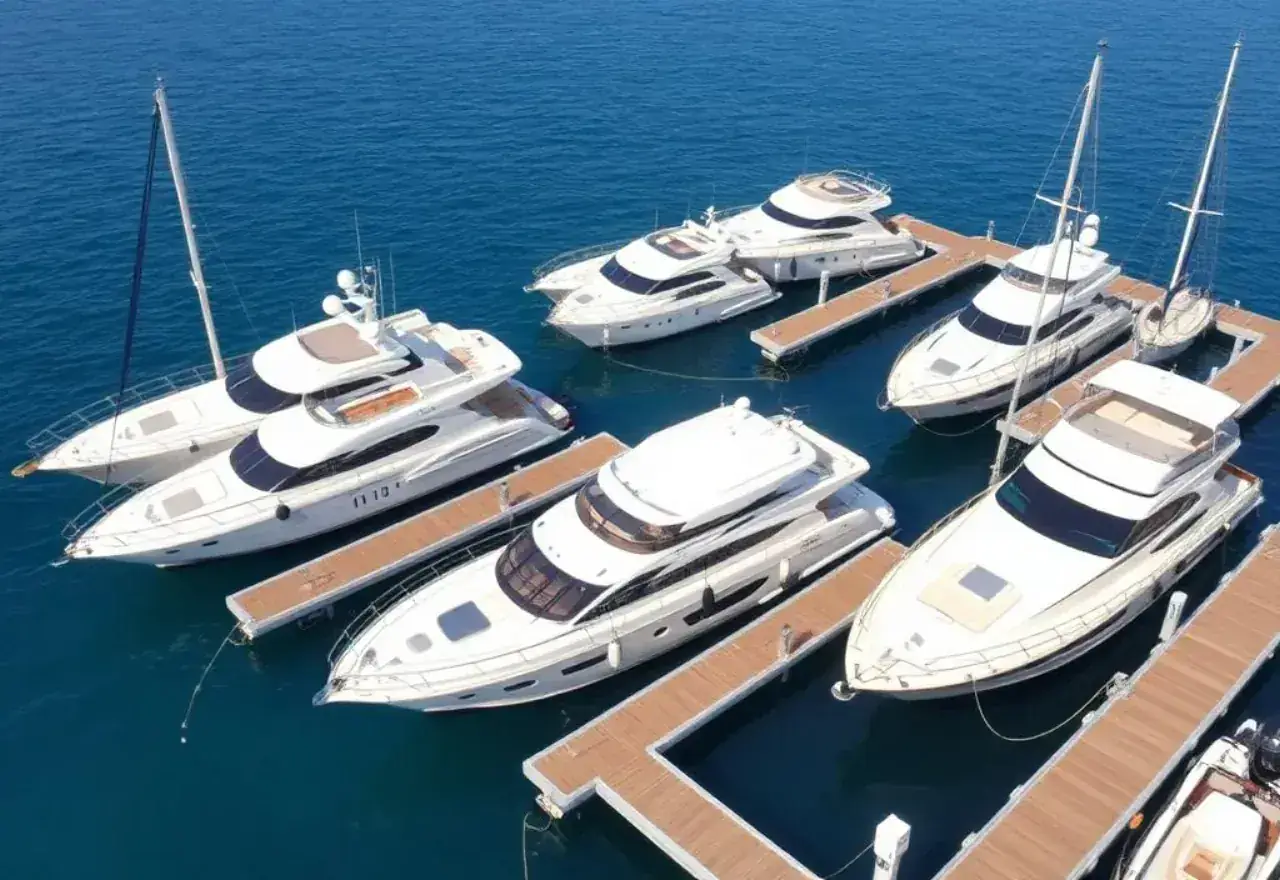
Dry stack marinas store boats indoors on stacked racks, launching them via forklift when you arrive — cheaper, drier, and lower-maintenance than wet slips.
Dry stack is most common for outboard-powered boats up to about 38 ft and 12,000 lb. The boat lives indoors, out of UV, rain, and salt air, which dramatically extends gel coat and upholstery life and eliminates bottom paint, growth, and zincs.
Trade-offs: you can only launch during staffed hours (often 6 AM – 6 PM), you can't keep a fully provisioned boat on the rack, and very large or inboard boats don't fit on the racks. Most dry stacks max out around 38 – 42 ft.
Dry stack runs 30–60% less per month than a comparable wet slip. Major operators include Marine Group Boat Works, Suntex, and Westrec across Florida, California, and the Gulf.
Reading past the brochure
Brochure copy makes most marinas sound interchangeable. Dry Stack Marinas are usually differentiated by something specific: indoor rack storage with forklift launch — an alternative to wet slips. That detail is what separates a marina that fits your boat from one that just happens to have an open slip.
Before judging fit, write down your boat's LOA (including platforms and pulpits), beam, draft at mean low water, power requirement, and how often you'll actually be aboard. Then compare against the marina's reality, not its photos.
What the marina is checking on its end
Behind the counter, the dockmaster is matching your numbers to a specific finger: slip length, beam clearance, water depth at low tide, fairway width on the approach, the right power pedestal, and whether neighboring boats are compatible.
If any of those numbers don't work, a careful marina will offer a different slip rather than crowd you in. Push for that conversation — being told "we'll make it work" is sometimes how boats end up wedged into the wrong berth.
Pricing reality check
Treat 30 – 60% less than equivalent wet slip as the planning range and ask any marina in this category for three numbers in writing: base rent for the slip they would actually assign you, average monthly electric for a boat your size, and the all-in monthly total including tax. If the dockmaster won't break it out that way, assume the gap between the brochure rate and your real bill will be at least 15–25%.
The amenity list, decoded
Expect a typical amenity stack of indoor rack storage, forklift launch on demand, wash-down on retrieve, fuel and ice on launch, maintenance services. Read it less as a feature list and more as a signal of how the marina is staffed: a marina that lists 24/7 dockmaster, on-site mechanic, and fuel is operating very differently from one that lists pool, bar, and concierge. Pick the operating model that matches how you actually use the boat.
Pros and cons
Pros
- • Matches a clear way of using a boat, so the slip search gets shorter
- • Easier to compare apples-to-apples against similar marinas nearby
- • Amenities, rules, and dockmaster expectations are predictable
- • Pricing patterns are well understood, so quotes are easier to vet
Cons
- • Availability can be tight in season or in popular harbors
- • Headline rates often leave out power, tax, and resort fees
- • House rules vary widely from one operator to the next
- • The best slips often require deposits or sitting on a waitlist
Red flags during the reservation call
Be cautious if the marina won't quote an all-in number, can't tell you the exact slip you'll be assigned, dismisses your insurance questions, or hedges on the storm plan. None of those are killer issues by themselves, but together they usually predict friction later.
On the other hand, a dockmaster who asks for your draft, fuel preference, and arrival ETA before you ask them is usually running a marina worth the money — even when the per-foot rate is higher than the harbor next door.
Best for
- • Outboard boats up to 38 ft
- • Owners doing minimal maintenance
- • Boats not used during the work week
- • Hot or hurricane-prone markets